

Feb 7, 2026
Growth Marketing
Why AI-Native Startups Grow 10× Faster Than SaaS Startups
Scaling AI-native startups requires more than rapid user growth. Sustainable scale comes from fast time-to-value, usage-driven retention, and monetization models designed to follow real product adoption, not precede it.
AI-native startups do not grow faster because they execute better marketing or hire stronger sales teams.
They grow faster because they are built on a fundamentally different growth model.
Many founders still try to scale AI products using a traditional SaaS playbook.
That mismatch is one of the biggest reasons AI startups stall too early.
To understand why, we need to compare two radically different models of growth:
SaaS-native startups
AI-native startups
Not at the feature level—but at the growth and go-to-market level.
1) SaaS Startups: The Classic Revenue Funnel
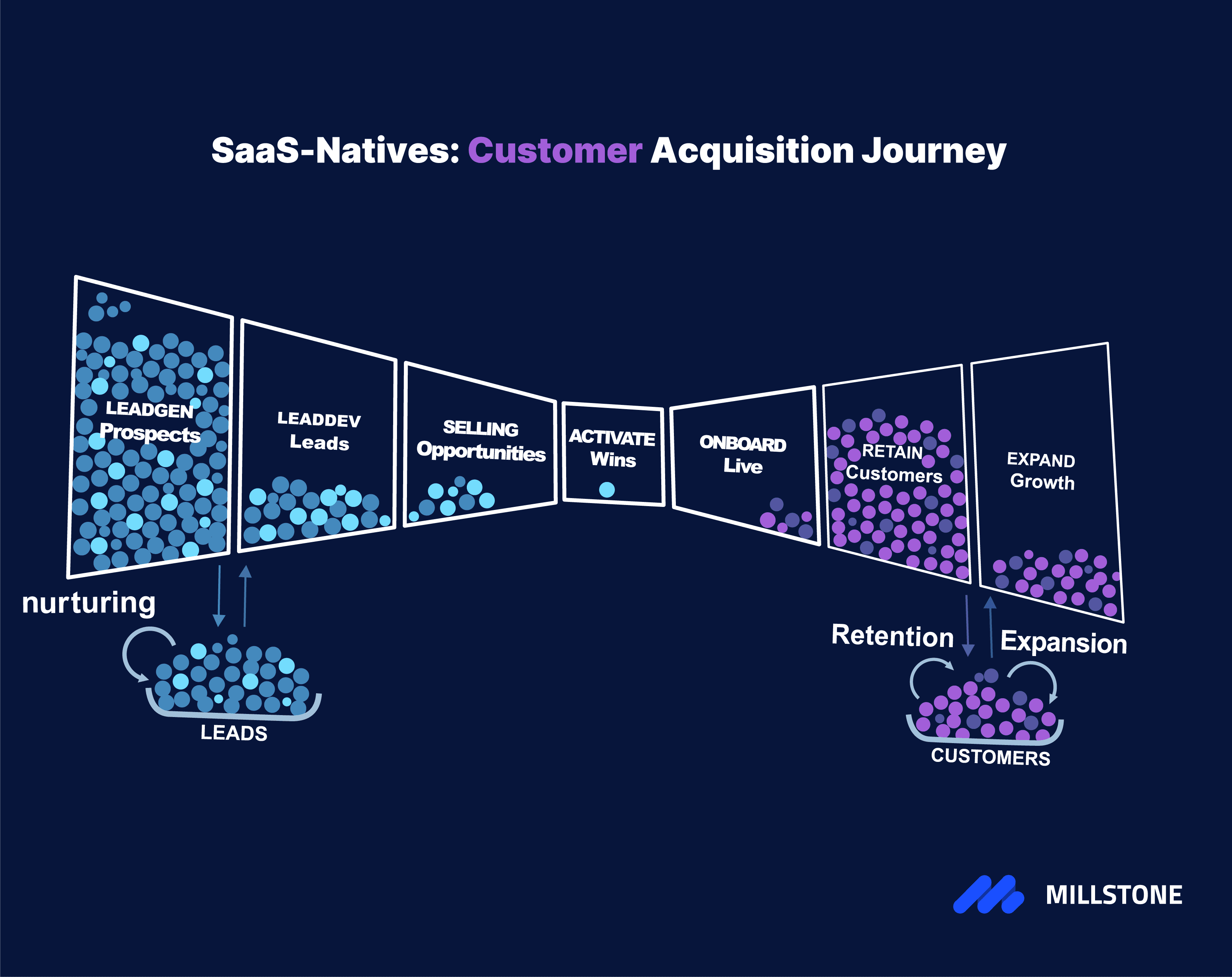
This is the default model most startups begin with.
The SaaS growth model is built around customer acquisition through a linear funnel.
How the SaaS funnel works
Lead generation
Lead qualification
Sales conversations
Contract close
Onboarding
Retention
Expansion
This model was designed for:
enterprise software
team-based tools
high ACV contracts
What this means for early-stage startups
For SaaS startups, this model creates three structural constraints.
Marketing happens before value
Users are asked to:
book demos
talk to sales
sit through pitches
Before they experience any real value.
Sales becomes the growth bottleneck
Growth speed is limited by:
founder availability
sales capacity
deal cycle length
Value is delayed
The real “aha moment” only happens:
after onboarding
after implementation
In short:
SaaS startups grow through deals, not through usage.
This is exactly where AI-native startups break away.
2) AI-Native Startups: From Customer Acquisition to User Acquisition
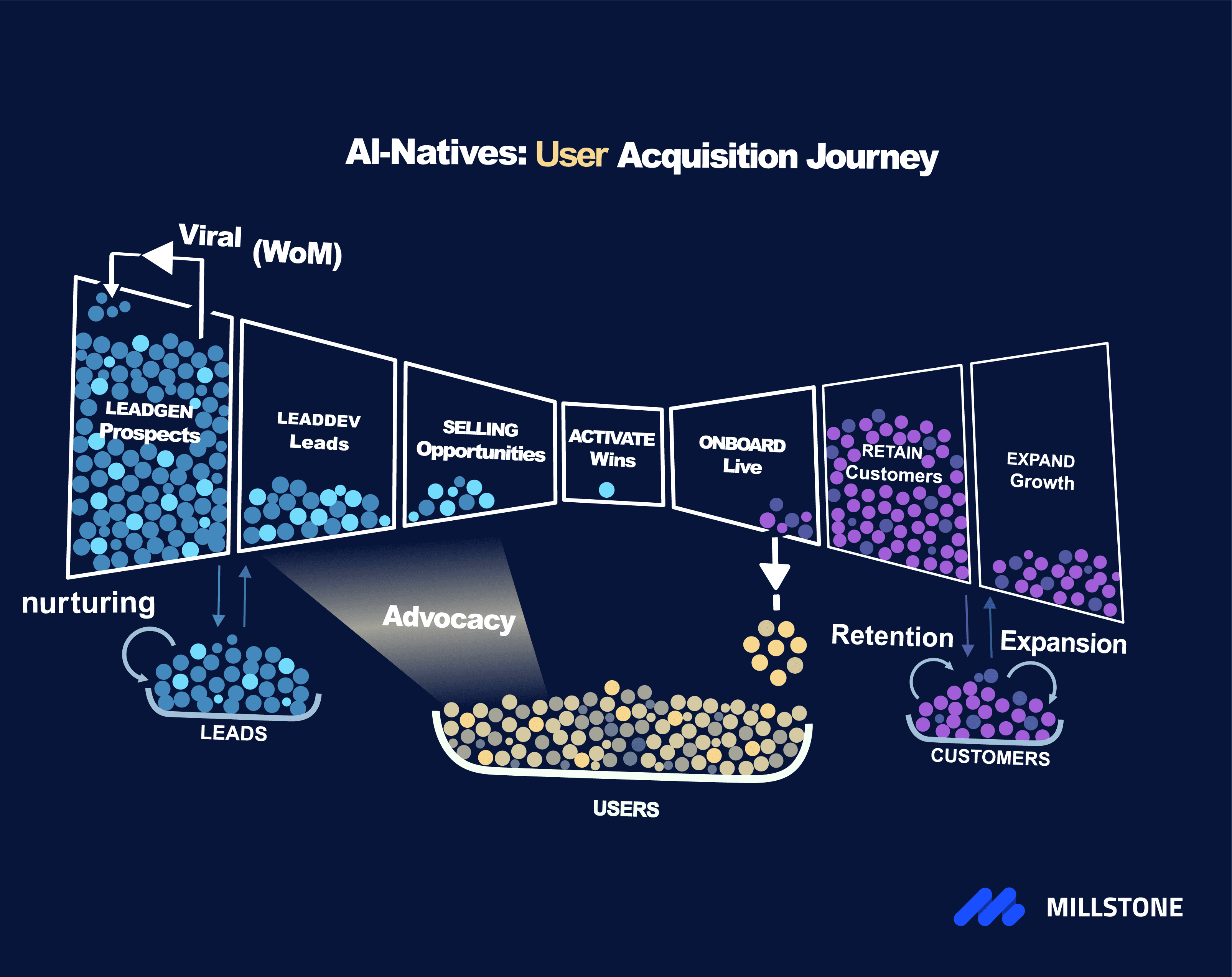
AI-native startups reverse the order.
They do not start with selling.
They do not start with persuasion.
They start with value delivery.
That is why the focus shifts from customers to users.
What stands out in the image immediately
Three elements that do not exist in the SaaS model:
Viral acquisition before the funnel
A large user pool at the center
An advocacy loop after usage
This is not a funnel.
It is a product-driven growth flywheel.
3) The Core Difference Founders Must Understand
SaaS startup:
Sell → onboard → deliver value
AI-native startup:
Deliver value → drive usage → monetize
This single inversion determines:
your GTM strategy
your pricing model
your metrics
your team structure
4) How AI-Native Startups Actually Grow
Step 1 — The entry point is the product
For AI-native startups, the entry point is:
not a demo
not a sales call
not a signup form
The entry point is the product experience itself.
Users arrive through:
shared outputs
screenshots
AI-generated content
visible workflows
For founders, this means:
Your product is your primary acquisition channel.
Step 2 — The user pool becomes the core asset
Successful AI startups first build:
tens of thousands or millions of users
before aggressive monetization
This works because:
AI delivers instant value
marginal cost per user is low
onboarding is self-serve
For early teams, this is critical:
Users are not a cost center—they are growth capital.
Step 3 — Advocacy replaces traditional marketing
In SaaS, marketing happens before product usage.
In AI-native startups, marketing happens after usage.
Users naturally distribute the product by:
sharing outputs
showing results
forwarding prompts
publishing workflows
Each active user can attract new users.
For startups, this means:
Usage matters more than branding.
Step 4 — Monetization follows adoption
In AI-native startups, pricing comes after value is proven.
Common models include:
freemium
usage-based pricing
credit systems
pro tiers
The order is always:
Users → Retention → Expansion → Revenue
Never the other way around.
5) Why This Model Is Ideal for Startups
AI-native growth is especially powerful for early-stage companies because:
No sales team required initially
Growth scales without adding headcount.
Faster path to product–market fit
Usage reveals value immediately.
Bottom-up expansion
Individuals adopt first, then teams and companies follow.
6) SaaS vs AI-Native Startups Compared
SaaS Startup | AI-Native Startup |
|---|---|
Lead-driven | Usage-driven |
Sales-led | Product-led |
Contract before value | Value before contract |
Customers as KPI | Users as KPI |
Funnel | Flywheel |
Marketing → Product | Product → Marketing |
7) What This Means for Your Startup
If you are building an AI startup, the key question is not:
“How do we optimize our funnel?”
The real question is:
“How fast do users experience value?”
The startups that win are not the best at pitching.
They are the fastest at delivering time-to-value.
FAQs
What is an AI-native startup?
An AI-native startup is a company where AI is the core product, not an add-on. It delivers immediate value without setup or implementation.
What is the difference between SaaS and AI-native startups?
SaaS startups sell software that teams must implement. AI-native startups deliver instant, individual value and monetize after usage.
Why do AI startups grow faster?
They rely less on sales, benefit from user-driven distribution, and deliver value before monetization.
Is this model suitable for B2B startups?
Yes. Many AI-native startups grow bottom-up through individuals and later expand into enterprise contracts.
When should an AI startup introduce sales?
After usage, retention, and dependency are clear. Sales should amplify growth, not initiate it.


Latest Blogs













Stay Updated
Sign up for my free newsletter that will help you accelerate growth.

No spam, just genuine updates!