

Mar 2, 2026
Product Development
How Vibe Coding Is Transforming Startup's Product Development
Discover what vibe coding is and why it’s transforming how startups build software. Learn how AI-powered development lets founders turn ideas into working products faster and with smaller teams.
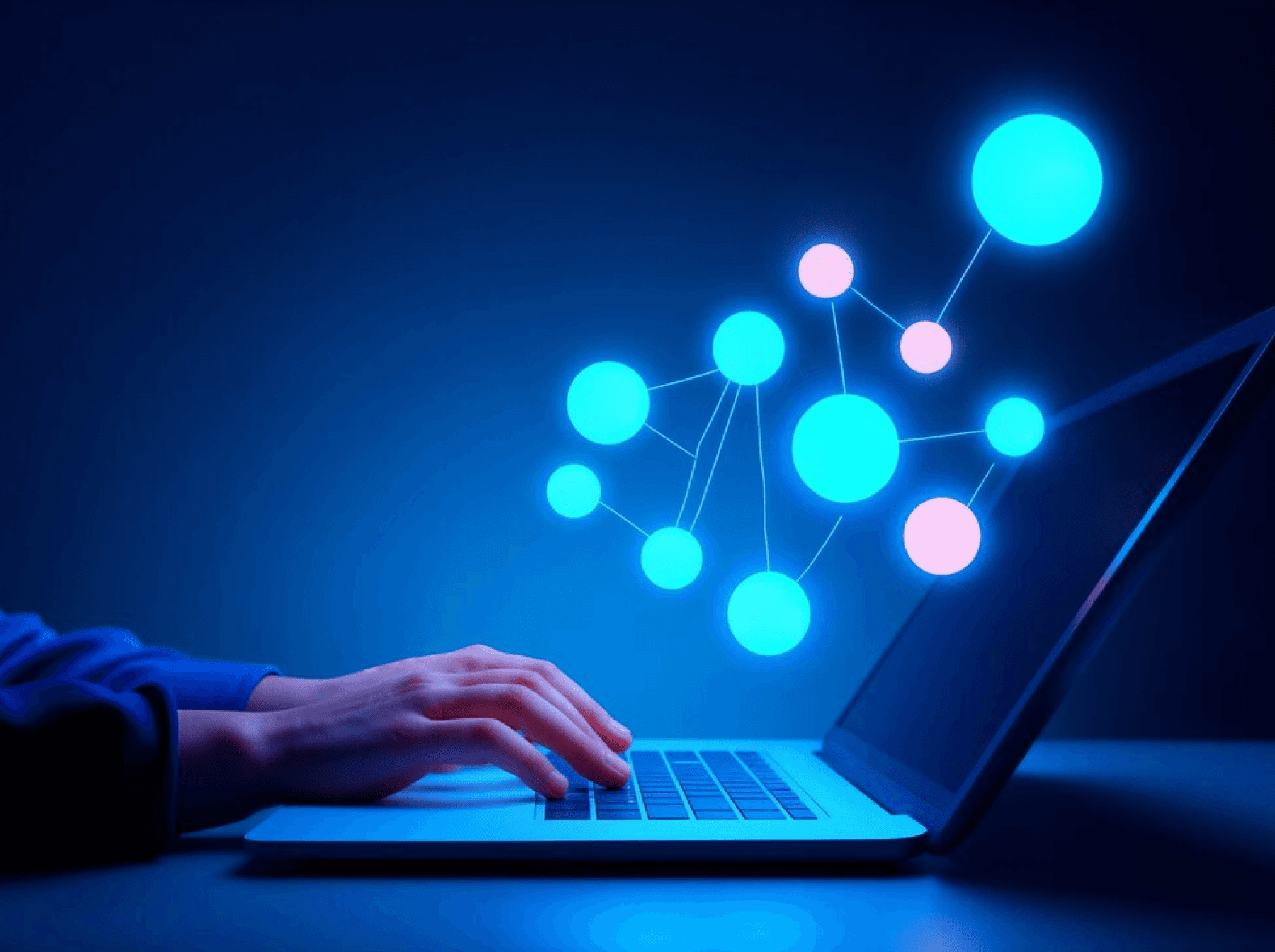
Software development is undergoing one of the most dramatic transformations in its history. For decades, building digital products required deep knowledge of programming languages, frameworks, and complex development environments. Today, a new approach known as vibe coding is redefining how software is created.
Instead of manually writing every line of code, developers and creators can now describe what they want to build in plain language while artificial intelligence generates the underlying code. This shift turns natural language—often English—into a powerful interface for building software.
The concept of vibe coding was popularized in 2025 by AI researcher Andrej Karpathy, who described it as a workflow where developers focus on the idea and the outcome while AI handles much of the coding process.
But vibe coding is more than just a new tool—it represents a fundamental shift in how digital innovation happens.
What Is Vibe Coding?
Vibe coding is a method of software development where AI generates most of the code based on natural language instructions.
Instead of writing complex syntax, the user simply explains what they want to build. The AI then interprets that request and produces the necessary code, architecture, or interface.
For example, instead of writing hundreds of lines of code, a user might say:
“Create a SaaS landing page with a signup form and payment integration.”
“Build a restaurant reservation system with an admin dashboard.”
“Generate a web app that analyzes sales data and shows charts.”
The AI translates those instructions into working software.
This approach transforms coding from a technical process into something closer to a conversation between humans and machines.
The Evolution of Software Development
Vibe coding did not appear overnight. It is the result of several technological developments over the past decade.
The first step came with no-code and low-code platforms, which allowed users to build applications through visual interfaces rather than programming languages.
The second step came with AI-assisted coding tools, which helped developers write code faster by suggesting snippets and functions.
The third step—and the one that defines vibe coding—is fully AI-driven development, where entire applications can be generated from natural language prompts.
This evolution drastically reduces the technical barrier to building software.
Why Vibe Coding Is Revolutionary
Vibe coding is not just a productivity improvement. It fundamentally changes who can build software, how quickly products are created, and how teams are structured.
1. Software Creation Becomes Accessible to Everyone
Traditionally, building software required years of training in programming languages and development tools. Vibe coding dramatically lowers this barrier.
Entrepreneurs, designers, marketers, and product managers can now build applications without extensive coding knowledge.
This democratization of software development allows far more people to turn ideas into working digital products.
2. Development Speed Increases Dramatically
One of the most powerful aspects of vibe coding is speed.
AI can generate functional prototypes within minutes or hours instead of days or weeks. This allows teams to test ideas quickly and iterate faster.
Small teams can now accomplish what previously required large engineering departments.
According to industry insights, AI-assisted developers can produce significantly more code than those working without AI support.
3. The Role of Developers Is Changing
Vibe coding does not eliminate developers, but it does change their responsibilities.
Instead of spending most of their time writing code, developers increasingly focus on:
Designing software architecture
Reviewing and improving AI-generated code
Ensuring security and reliability
Guiding AI systems through precise instructions
In other words, developers become AI orchestrators rather than code typists.
4. Ideas Become the New Currency
One of the most important shifts created by vibe coding is that ideas become more valuable than technical implementation.
If AI can generate code quickly, the limiting factor is no longer programming skill—it is creativity and problem solving.
People who can clearly describe solutions and design useful systems will have a major advantage in the AI-driven software landscape.
Who Uses Vibe Coding?
Vibe coding is already being adopted by a wide range of professionals.
Entrepreneurs
Startup founders use AI to build prototypes and minimum viable products without hiring large engineering teams.
Product Managers
Product managers can experiment with new features and create working prototypes instead of static wireframes.
Designers
Designers can transform visual ideas into functioning interfaces and interactive experiences.
Developers
Even experienced developers rely on AI tools to speed up coding tasks, automate repetitive work, and explore new solutions.
Research shows that many vibe coding users are actually non-developers, highlighting how AI is expanding access to software creation.
The Risks and Challenges of Vibe Coding
Despite its advantages, vibe coding also introduces several challenges.
The biggest concern is security and reliability.
Because AI generates code automatically, users may deploy software without fully understanding how it works. This can lead to vulnerabilities.
Common problems include:
Exposed API keys or credentials
Sensitive information may accidentally appear in public code.
Incorrect access permissions
Applications may allow unauthorized users to access private data.
Hardcoded passwords or tokens
AI-generated code sometimes includes credentials used for testing.
These issues highlight the importance of security guardrails within AI development platforms.
How Vibe Coding Will Shape the Future of Software
Looking ahead, vibe coding is likely to become a standard part of software development rather than a separate category.
Several trends are expected to emerge:
AI-native development tools
Development platforms will integrate AI deeply into their workflows.
Smaller development teams
Companies will rely on fewer engineers while maintaining high productivity.
New developer roles
Developers will act as architects, reviewers, and AI supervisors.
Increased experimentation
Since building software becomes faster, companies will experiment with more products and features.
In the long term, the ability to clearly communicate ideas to AI systems may become one of the most valuable skills in the tech industry.
Conclusion
Vibe coding represents a major shift in how software is built. By turning natural language into a programming interface, AI makes it possible for more people to create digital products faster than ever before.
While the technology still presents challenges—especially around security and reliability—it is clear that AI-assisted development will play a central role in the future of software engineering.
In this new landscape, the most important skill is no longer writing code line by line. Instead, success will depend on how well you can translate ideas into clear instructions that AI can understand and execute.
Build Faster With AI-Driven Development
Vibe coding is changing how startups build software. Instead of large engineering teams and long development cycles, founders can now turn ideas into working products faster with AI and modern development tools.
At Millstone, we help startups accelerate growth through AI-driven marketing, vibe-code development, and scalable product strategies. Whether you're building an MVP, validating a startup idea, or scaling your platform, we help you move faster with less risk.
If you want to turn your idea into a real product or scale your startup more efficiently, we’re here to help.
FAQ
What is vibe coding in simple terms?
Vibe coding is a way of building software where AI writes most of the code based on natural language instructions. Users describe what they want, and AI generates the software.
Why is vibe coding important?
Vibe coding lowers the barrier to software development, allowing more people to build digital products without extensive programming knowledge.
Do developers still need to learn programming?
Yes. While AI can generate code, developers are still needed to design systems, ensure security, and maintain complex software.
Can businesses rely on AI-generated code?
AI-generated code can be useful, but it should always be reviewed and tested. Security checks and quality control remain essential.
Is vibe coding only for startups?
No. Large companies are also adopting AI-assisted coding tools to improve productivity and speed up development cycles.
What skills are needed for vibe coding?
Important skills include problem-solving, system thinking, communication with AI tools, and understanding software architecture.
Will AI replace software engineers?
AI will not replace engineers entirely, but it will change how they work. Developers will focus more on architecture, strategy, and reviewing AI-generated solutions.
Is vibe coding the future of programming?
Many experts believe AI-assisted development will become the standard workflow in software engineering, making vibe coding a core part of modern development practices.


Latest Blogs











Stay Updated
Sign up for my free newsletter that will help you accelerate growth.

No spam, just genuine updates!